Late Subcontractor Quotes for Estimators: Accept, Reject, or Log?
Late Subcontractor Quotes for Estimators: Accept, Reject, or Log? !

A late subcontractor quote can sometimes be used in private work, but under formal procurement rules such as FAR or AIA instructions it is usually out. Before you decide anything, secure the submission and record exactly when it arrived. Then read the controlling document, whether that is the IFB, the RFQ or the AIA instructions, because it decides the outcome.
TL;DR:
- For federal invitations that omit a receipt time, the default is 4:30 p.m. local time; exceptions are narrow and depend on government control.
- Separate late quotes from incomplete submissions, and check whether an internal inbox, portal, or front desk failure caused the delay.
- Preserve system timestamps, full email headers, and approval records; your receiving system’s time carries more weight than a sender’s claimed send time.
- Name an exact receipt time and time zone in each RFQ, designate one submission channel, and distinguish the internal cutoff from the contractual deadline.
Table of Contents
- What the rules say about late quotes
- How do you evaluate and decide on a late quote?
- What should you keep as an audit trail?
- How do you set deadlines that hold up?
- How do you cut down late quotes on bid day?
- Why late quotes are a process problem, not a people problem
- How we help you prevent and manage late subcontractor quotes
- FAQ
- Sources
What the rules say about late quotes
Government work is the strictest. Under FAR 52.214-7, a bid that reaches the designated office after the exact time specified is “late” and generally not considered. When an invitation states no time, the default receipt time is 4:30 p.m. local time on the due date. The clause does carve out narrow exceptions, such as government control of the bid before the deadline, but you should not count on them.
Formal private contracts have their own controlling instructions. AIA A701 provides procedures for preparing and submitting bids, including bonding and submission requirements. AIA’s guidance can help you identify the applicable requirements.
Inside your own estimating shop, you have more room. A general contractor may take a late subcontractor quote when it is fair to other bidders and the schedule allows. The risk is audit and fairness exposure, so procurement guidance stresses following your written policy rather than your gut.
Keep two problems apart. A late quote missed the deadline. An incomplete quote arrived on time but lacks scope, pricing or required forms. Each calls for a different response, and mixing them up is how decisions become hard to defend.

How do you evaluate and decide on a late quote?
Work the same steps every time, whether the quote is a rounding error or a big swing in your number.
- Secure the submission. Preserve portal logs, email headers or courier stamps. Do not alter the file beyond what intake requires.
- Read the solicitation. Check the RFQ, addenda and any stated delivery channel, deadline or exception.
- Find the cause. Decide whether the subcontractor was late or your own inbox, portal or front desk failed. Internal failures are treated differently and deserve a log review.
- Escalate to the right approver. Your procurement policy decides whether the outcome is a documented rejection, acceptance with conditions, or an extension where one is permitted.
- Communicate and record. Tell the subcontractor what you decided and why, then file the message with the decision.
Pro Tip: Decide your late-quote rule before bid day. A policy written at 4:45 p.m. on a deadline day will always look like a favor to someone.
What should you keep as an audit trail?
Receipt time recorded by the receiving system carries more weight than the time a sender claims to have hit send. That is why the evidence has to come from your side of the transaction. Preserve:
- System timestamps and portal confirmation messages
- Full email headers, not just a forwarded copy
- Courier tracking and envelope markings
- Screenshots of the inbox or upload page
- Help-desk or IT records if a system problem is suspected
Then write a short decision record: the facts reviewed, your cause assessment, the policy you applied, the approver’s name and timestamp, and every message sent. A documented receipt time is what lets you justify the decision later, whether the question comes from an auditor or a claims reviewer.
How do you set deadlines that hold up?
Ambiguity is what makes late quotes arguable. Put an exact receipt time in the RFQ, including the time zone, and name one delivery channel: a portal, a single email address or a physical address. Remember the federal default of 4:30 p.m. local time applies only when a government invitation says nothing, so never lean on it in your own documents.
Separate a soft cutoff from a hard one. Many general contractors set an internal cutoff a few hours ahead of prime-bid closing, so estimators can review and level quotes before the real deadline. The hard deadline is the contractual one. Tell subcontractors which is which.
Useful instruction language includes:
- A required portal confirmation or timestamped upload
- A statement of what happens to late quotes: rejected, or reviewed at your discretion
- A request for assumptions, exclusions and a validity date
If you are tightening subcontract paperwork at the same time, a guide to subcontract agreements can help with signed assumptions and attachments. Finally, align subcontractor deadlines with your own prime-bid deadline, so the supply chain is not working to a different clock than you are.
How do you cut down late quotes on bid day?
Most late quotes trace back to habits, not bad luck. Practitioners advise getting subcontractor numbers well before prime-bid time, giving estimators room to verify scope and compare like for like.
- Set the internal cutoff several hours before your own deadline and say so in the RFQ
- Use scope-driven templates that force assumptions and exclusions onto the page
- Send scheduled reminders and keep a single submission channel
- Read back complex quotes by phone before you rely on them
- Keep a “late queue” and review it only when a quote could move your bottom line or fill a gap
- Capture validity dates so a good number does not expire mid-negotiation
Our posts on quote scope gaps and bid accuracy checks go deeper on the scope side. When a late quote materially changes your price, escalate fast and write down why you chose as you did.
Pro Tip: Ask for the quote in your template, not theirs. Comparing structured quotes is easier when the information is consistent.
Why late quotes are a process problem, not a people problem

Our view: a late quote is rarely about one careless subcontractor. It is usually a sign that the intake process cannot absorb the last hour of bid day, and the estimator ends up making a judgment call under pressure. We think the fix is boring and effective: tracked quotes, validity dates and timestamp logs, so any late-quote decision can be explained afterward.
Structured templates and quote leveling also remove last-minute surprises and protect your margin. Our articles are a good place to start.
— arosbid team
How we help you prevent and manage late subcontractor quotes
Chasing quotes by email is where deadlines slip. In ArosBid, vendor quote tracking keeps subcontractor quotes in one place, so you can track them during the bid process. Quote leveling then puts the numbers side by side, which speeds review when time is short.
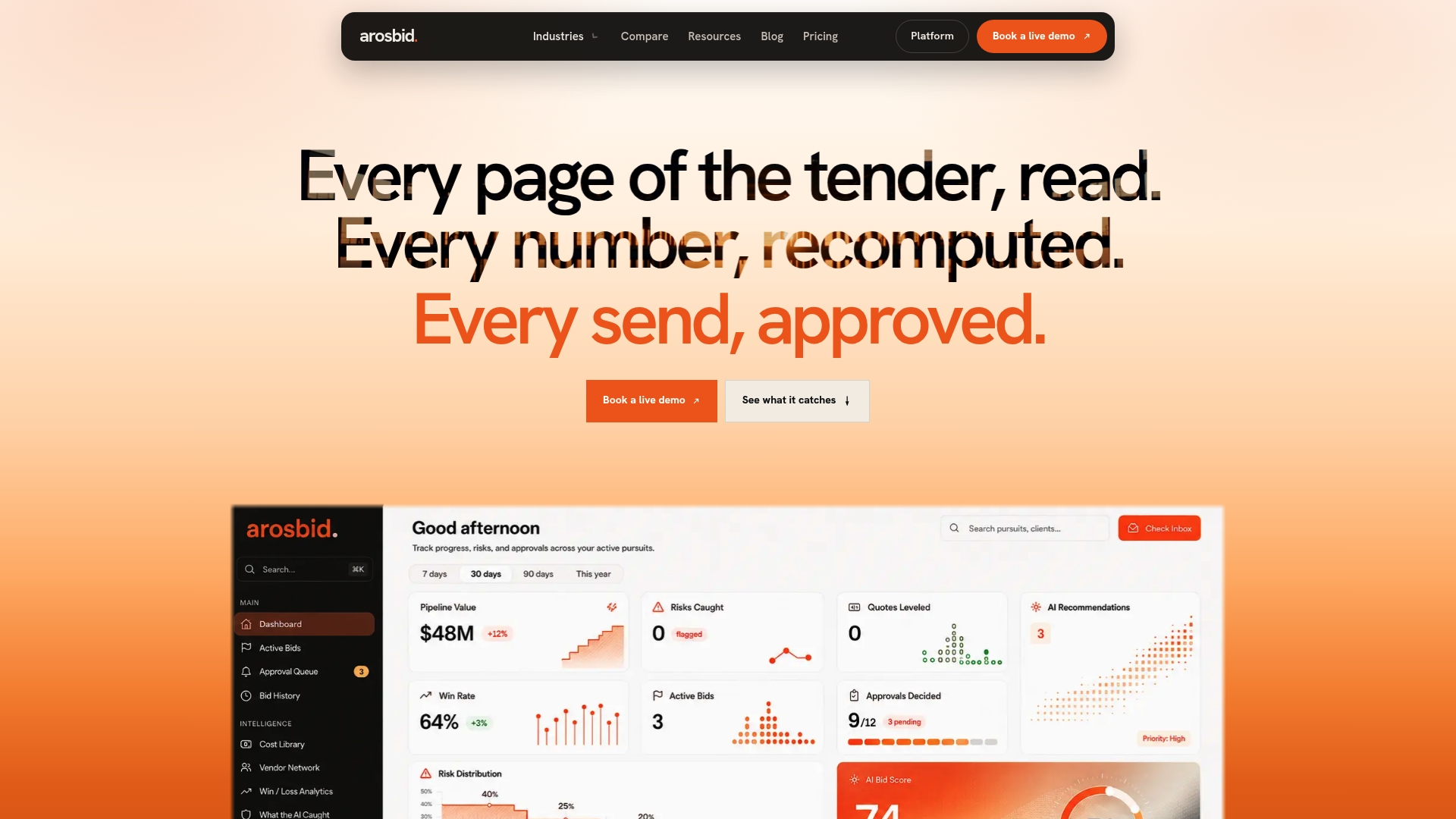
Our bid management platform works alongside Excel and Outlook, so you do not have to rebuild how your team already works. Book a live demo and we will show you quote tracking in action, or see the options on our pricing page.
FAQ
What happens when a contractor misses a deadline?
It depends on the controlling document. Under formal rules, a submission after the stated time is generally not considered. In private work, the decision follows your written policy, and the outcome should be documented either way.
How do you write a delay report?
State what was due and when, what actually happened, and the evidence, such as timestamps and logs. Add the cause, the policy you applied and who approved the decision. Keep it factual so it stands up in a later audit.
How long should a contractor take to give you a quote?
There is no single standard, because it depends on scope and complexity. Practitioners advise receiving subcontractor quotes hours or days before prime-bid time for complex work. Set the due date in your RFQ and build in an internal cutoff.
Can a late quote ever be accepted?
Yes, in private practice if it is fair to other bidders and the schedule allows. Under rules like FAR 52.214-7, only narrow exceptions apply, so check the solicitation first.