Contractors: Seven Part Bid Proposal Format With ArosBid Compliance
Contractors: Seven Part Bid Proposal Format With ArosBid Compliance ! Construction bid proposal title card illustration Every winning bid proposal follows the same seven-part skeleton: executive summary, scope of work, exclusions and assumptions, itemized pricing, schedule, qualifications, and terms with a signature block.
Every winning bid proposal follows the same seven-part skeleton: executive summary, scope of work, exclusions and assumptions, itemized pricing, schedule, qualifications, and terms with a signature block. Copy the full template in the next section and adapt it to your solicitation. But never treat any template as gospel: the solicitation’s stated order, page limits, and required attachments always override whatever format you started from.
TL;DR:
- Accurate compliance with the solicitation’s required section order, attachments, and page limits is critical, as deviations lead to immediate disqualification.
- Clearly state specific exclusions and assumptions to avoid post-award disputes, including detailed site access and permit responsibilities.
- Break down pricing into labor, materials, permits, equipment, overhead, profit, and contingency, with unit rates for flexible quantities, and include tax treatment explicitly.
- Use real dates, named contingencies, and relevant project experience, prioritizing scope language that matches the RFP and measurable deliverables.
- Regularly review and update your exclusions list by learning from past disputes, and utilize automated tools to ensure bid compliance and reduce errors.
Table of Contents
- The Complete Bid Proposal Format, Section by Section
- How to Fill Each Section Without Losing the Bid
- A Filled Example: Condensed Subcontract Bid
- Responsiveness Checklist: What Gets Bids Disqualified
- Building a Pricing Breakdown Evaluators Can Actually Audit
- How ArosBid Closes the Gaps That Cause Rejections
- Tailoring Your Bid Format to the Industry You’re Bidding In
- The Formatting Mistakes That Quietly Cost You Bids
- Designing a Proposal That Reads as Professional
- Attachments and Supporting Documents Worth Including
- Customizing the Template for Unusual Client Requirements
- ArosBid Team Perspective: Rules of Thumb That Actually Move the Win Rate
- Put Your Format on Autopilot With ArosBid
- Where to Go Deeper on Proposal Requirements
- Sources
The Complete Bid Proposal Format, Section by Section
There’s no universal template mandated by law or industry group. The solicitation itself sets the rules, and a beautifully designed proposal that ignores the RFP’s required section order gets tossed before anyone reads your pricing. What follows is the structure that satisfies nearly every commercial and public solicitation you’ll encounter, built around the fields procurement professionals actually look for.
Header block. Bid reference number, both parties’ legal names and addresses, submission date, primary contact with phone and email, and the solicitation number if one exists. This sounds obvious until you’ve seen a bid rejected because the estimator typed the wrong RFP number from a copy-pasted template.
Executive summary. Two paragraphs, no more. Paragraph one states who you are, what you’re bidding on, and your total price. Paragraph two names your single strongest differentiator, whether that’s a faster schedule, a specialty certification, or a track record on similar projects. Evaluators often skim this section and the price summary first, so front-load the number and the reason to keep reading.
Scope of work. List deliverables as measurable outputs, not vague promises. “Install 4,200 square feet of standing-seam metal roofing per manufacturer spec, including flashing and gutter tie-in” beats “roofing work as needed” every time. Attach acceptance criteria, meaning the standard the owner or GC will use to sign off.
Exclusions and assumptions. This is where projects fall apart after award. State plainly what you are not doing and what conditions you’re assuming, such as site access, existing utility locations, or permit responsibility.
Pricing. Break the number down by labor, materials, permits, equipment, subcontractor costs, overhead, and profit, with a separate contingency line. State whether the total includes or excludes sales tax.
Schedule. Milestones with dates or durations, plus named contingencies like weather days or permit lead time.
Qualifications. Licenses, bonding capacity, relevant project history with dates and dollar values, and references.
Terms and acceptance. Validity period, payment schedule, bond and insurance references, and a signature line for both parties.
| Section | What Goes In It | Typical Length |
|---|---|---|
| Executive summary | Who you are, total price, one differentiator | 1 to 2 paragraphs |
| Scope of work | Deliverables, standards, acceptance criteria | Half page to 1 page |
| Exclusions & assumptions | Site access, permits, owner responsibilities | 5 bullet lines |
| Itemized pricing | Labor, materials, permits, equipment, overhead, profit, contingency | 1 table |
| Schedule | Milestones, start/end dates, contingencies | 1 table |
| Qualifications | Licenses, bonding, project examples, references | Half page |
| Terms & acceptance | Validity period, payment terms, signatures | Quarter page |
Every field here traces back to what procurement evaluators actually require to score a bid as complete: contact information, job identification, scope, budget, terms, timeline, and signatures.
How to Fill Each Section Without Losing the Bid
Knowing the sections is half the job. Filling them the way an evaluator wants to read them is the other half, and it’s where most contractors leave points on the table.
Executive summary: sell before you explain. Lead with the total number and your fit for the job, not a company history lesson. Use a short bulleted list of two or three benefits, and name one thing that separates you from whoever else is bidding.
Scope: mirror the RFP’s own language. If the solicitation calls it “furnish and install,” use “furnish and install,” not “provide and set.” When a solicitation lists many discrete requirements, a requirements-response matrix that maps each RFP item to your response line by line reads as far more responsive than narrative prose. Include quantities and standards wherever you can: square footage, linear feet, ASTM or ANSI references, whatever applies to your trade.
Pricing: show your math, then protect yourself. List unit rates for anything that could change quantity later, like $/linear foot for trenching or $/ton for structural steel. Present optional items and alternates as separate line items with their own subtotal, never buried in your base price. List exclusions right next to pricing, not three pages away, so nobody can claim they missed them.
Schedule: dates beat durations, durations beat vague promises. “Substantial completion by June 12, 2026” is stronger than “8 weeks from mobilization,” because it removes ambiguity about when the clock starts. Name your contingencies specifically: permit approval timelines, weather days for exterior work, material lead times for anything custom-fabricated.
Qualifications: relevance over volume. Three project examples with dates, contract values, and outcomes beat a ten-project list with no context. If the RFP is for a hospital renovation, lead with your healthcare experience even if your biggest job was a warehouse.
Exclusions and assumptions: be specific enough to survive a dispute. Vague exclusion language is the single most common source of post-award disputes. “Site access provided by owner during standard business hours, Monday through Friday” holds up. “Owner to provide access” does not.
Terms: state your validity window and mean it. Sixty to ninety days is standard for commercial work, and federal sealed bids often specify their own minimum acceptance period in the solicitation itself. Include payment milestones tied to completion percentages, and add termination-for-convenience language so both parties know the exit terms upfront.
- Executive summary: total price and one differentiator, nothing more
- Scope: RFP language plus measurable quantities and standards
- Pricing: unit rates, separated alternates, exclusions stated nearby
- Schedule: real dates, named contingencies
- Qualifications: three relevant jobs beat ten unrelated ones
- Exclusions: specific and testable, not vague
Pro Tip: Build your exclusions list as a living document across every job you bid. Every dispute you’ve had on a past project becomes a sentence in this section on the next one, and within a year you’ll have a boilerplate that closes most of the gaps before they open.
A Filled Example: Condensed Subcontract Bid
Here’s what a populated proposal looks like for a mechanical subcontract on a mid-size commercial build. Figures below are illustrative only.
- Executive summary. “We propose to furnish and install the complete HVAC package for the Riverside Office Park, Building B, per drawings M1.1 through M4.3, for a total price of $412,500. Our team has completed four comparable commercial HVAC installations in the past 24 months, each delivered on schedule.”
- Scope (three deliverables). Furnish and install rooftop units per manufacturer spec, tested to ASHRAE 62.1 ventilation standards. Install ductwork per drawing set with pressure testing documentation submitted at completion. Commission and balance all zones, with a signed test-and-balance report as acceptance criteria.
- Pricing snapshot. Materials: $215,000. Labor: $142,000. Permits: $8,500. Subtotal: $365,500. Overhead and profit (12.9%): $47,000. Total: $412,500, excluding sales tax.
- Schedule. Rooftop unit delivery and set: April 3, 2026. Substantial completion and balancing report: May 29, 2026.
- Validity and exclusions. This bid is valid for a standard commercial acceptance period from submission. Excludes electrical disconnects, roof curb structural modifications, and permit fees beyond mechanical scope. Acceptance requires signature below and a countersigned purchase order within the validity window.
Responsiveness Checklist: What Gets Bids Disqualified
Most disqualified bids aren’t beaten on price. They’re thrown out before anyone compares numbers, usually over something procedural that a five-minute check would have caught.
Run through this before you hit submit:
- Section order, page limits, and font size match the solicitation exactly, not your default template
- Every required attachment is included: insurance certificates, bonds, licenses, references
- Bid bonds and performance bonds are attached if the solicitation calls for them, and wet signatures are provided where digital ones aren’t accepted
- Every mandatory form is filled in completely, with no blank fields left for “we’ll clarify later”
- Submission method matches instructions exactly, whether that’s a procurement portal, a specific email address, or a sealed physical envelope
- Deadline is confirmed against the solicitation’s stated time zone, not your local clock
Public-sector work carries extra weight here. Government solicitations frequently require bid bonds, performance bonds, and prevailing-wage compliance that a commercial template simply doesn’t account for. Treating a private-sector proposal format as interchangeable with a public tender is one of the fastest ways to get disqualified without ever being evaluated on merit.
The most common errors that sink otherwise strong bids: totals that don’t match between the summary and the itemized breakdown, a missing signature on page one of a multi-page form, and attachments referenced in the proposal but never actually included in the submission packet. None of these reflect your pricing or your capability. They reflect a five-minute review step that got skipped under deadline pressure.
Building a Pricing Breakdown Evaluators Can Actually Audit
Itemized pricing does two jobs at once: it helps you win the bid, and it protects you when change orders come up six months into the project. A pricing section that only shows a lump sum gives you nothing to point to later.
Break your costs into labor, materials, equipment, subcontract costs, overhead, profit, and a separate contingency line. Contingency deserves its own row, not a markup buried inside your profit margin, because owners increasingly ask contractors to justify that number separately during negotiation.
Unit pricing versus lump-sum depends on how firm the quantities are. If the drawings specify exact square footage or linear feet, lump-sum works fine. If quantities could shift, like excavation depth that depends on what’s actually in the ground, quote a unit rate instead so you’re not absorbing risk you can’t price accurately upfront. Present any alternates or add-on options as separate line items with their own subtotals, never folded into the base number where an evaluator has to guess what’s optional.
State your tax treatment in plain language: “Total price excludes applicable sales tax” or “Total price includes sales tax at current local rate.” Leaving this ambiguous creates disputes at invoicing that have nothing to do with your actual workmanship.
| Line Item | Category | Notes |
|---|---|---|
| Direct labor | Labor | Include burden and applicable prevailing wage if required |
| Materials | Materials | Reference supplier quote date to protect against price volatility |
| Permits and fees | Permits | List by jurisdiction if project spans multiple |
| Equipment/rental | Equipment | Owned vs. rented should be noted separately |
| Subcontractor costs | Subcontract | Attach subcontractor quotes as backup if requested |
| Overhead & profit | Markup | State as a percentage for transparency |
| Contingency | Risk | Typically 3% depending on project complexity |
- Show a detailed appendix with every line item for the estimator reviewing your math
- Show a one-line total in the executive summary for the decision-maker skimming for a number
- Note that both together reduce evaluator friction and speed up comparison against competing bids
- For electrical or plumbing scopes with volatile material costs, a trade-specific unit-rate breakdown protects margin better than a single lump number
How ArosBid Closes the Gaps That Cause Rejections
Most non-responsive bids aren’t lost to bad pricing. They’re lost to a missed clause buried on page 14 of a 40-page RFP, or a required attachment that got left off during a late-night assembly rush. That’s the exact failure mode ArosBid’s Trade Bid Command Center was built to catch.
The platform runs automated checklists against the solicitation itself, flagging missing required fields, unmet attachment requirements, and clauses that conflict with your standard terms before anyone hits submit. Instead of one estimator manually cross-referencing a 40-page RFP against a proposal template at 11 p.m., the system does that comparison automatically and surfaces what’s still outstanding.
Inside the command center itself:
- Approval tracking shows exactly who signed off on which pricing revision, so nobody submits a stale number
- Vendor quote leveling puts subcontractor bids side by side on equal terms, which is where most pricing errors hide
- Compliance document tracking keeps bonds, insurance certificates, and licenses attached to the right bid automatically, rather than living in someone’s inbox
Because ArosBid integrates directly with Excel and Outlook, your existing pricing sheets and correspondence flow into the compliance record without re-entry, which preserves the audit trail if a dispute surfaces after award. Teams using an AI-driven tender review process catch addenda changes automatically instead of relying on someone remembering to check the portal for updates.
Pro Tip: Set your compliance checklist up as a template inside your bid tracking tool before your busiest bidding season starts. Retrofitting a checklist after you’ve already lost a bid to a missing attachment costs you far more than building it in advance.
Tailoring Your Bid Format to the Industry You’re Bidding In
The seven-section skeleton holds across trades, but what fills each section shifts a lot depending on what you’re bidding.
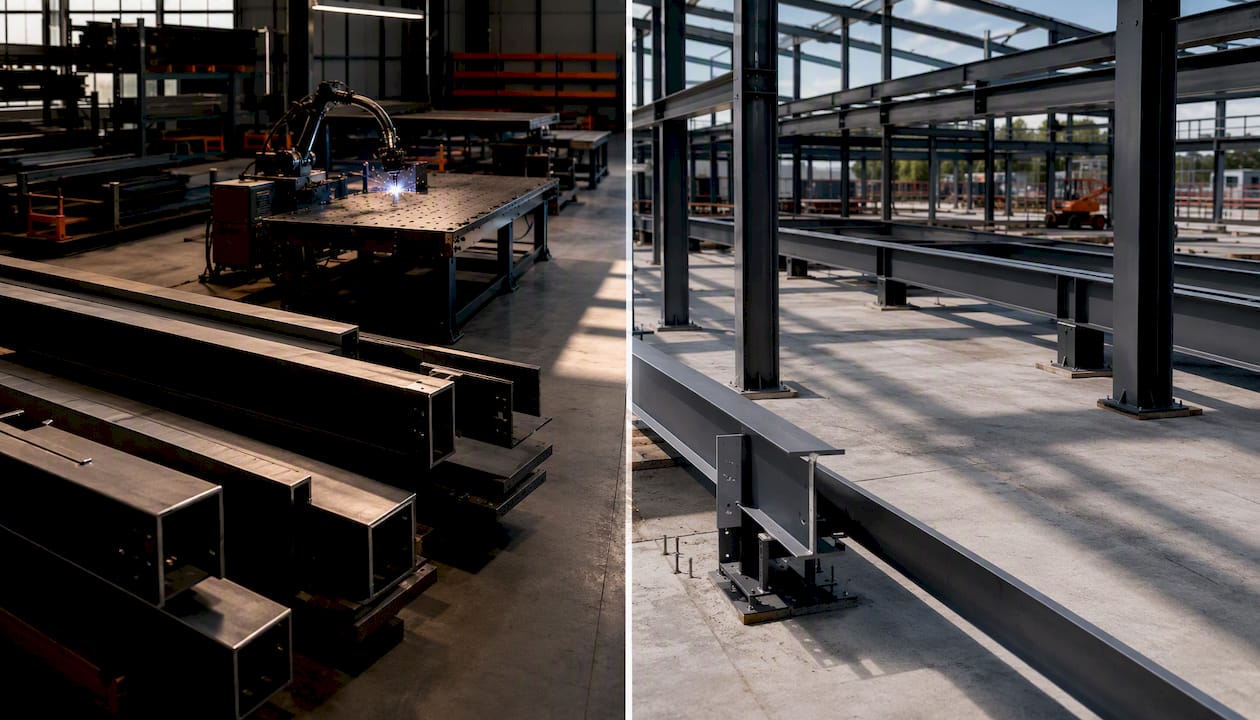
Structural steel and fabrication bids need a scope section that separates fabrication from erection, since they’re often priced and scheduled differently. Exclusions should call out whether you’re supplying anchor bolts or the general contractor is. A steel-specific pricing structure that isolates mill certifications and shop-drawing approval time from field labor avoids scope confusion during buyout.
Mechanical and plumbing proposals live or die on the exclusions section, since so much of the scope touches other trades. State plainly whether you’re responsible for cutting and patching, roof penetrations, or electrical disconnects, because those boundary lines are where change orders originate.
Healthcare and education projects usually carry infection-control or safety compliance requirements that belong in your scope section as named standards, not general statements. Reference the specific code or certification, since evaluators on institutional projects tend to score compliance language heavily.
Civic and public works bids need your qualifications section to lead with bonding capacity and prevailing-wage compliance history, since those often disqualify a bidder before price is even considered.
The core lesson: don’t just swap the company name on last quarter’s template. Reread the scope section against the actual solicitation every single time, because the fields that matter shift by trade even when the skeleton doesn’t.
The Formatting Mistakes That Quietly Cost You Bids
Most bid proposal mistakes aren’t about content. They’re about presentation choices that make evaluators work harder than they should have to.
Burying the total price. If an evaluator has to hunt through three pages to find your bottom line, you’ve already lost momentum. State it in the first paragraph of your executive summary and again in the pricing section.
Copying a template without checking solicitation instructions. A gorgeous proposal that ignores the RFP’s required section order or page limit gets marked non-responsive regardless of price. Always check the solicitation first, format second.
Vague exclusions. “Excludes miscellaneous items” tells an evaluator nothing and protects you from nothing. Name what you’re excluding specifically.
Mismatched totals between sections. If your executive summary says $412,500 and your itemized pricing sums to $409,800, that discrepancy alone can trigger a rejection for lack of internal consistency.
Inconsistent formatting across sections. Switching fonts, margins, or table styles between pages signals a rushed assembly job, which makes evaluators wonder what else got rushed.
Missing signatures or dates. A proposal without a signed acceptance block isn’t a bid. It’s a draft.
Fix these before you touch your pricing strategy, because a technically perfect price attached to a sloppy document often loses to a slightly higher price attached to a clean one.
Designing a Proposal That Reads as Professional
Content wins the bid. Layout decides whether anyone reads the content carefully enough to notice.
Use a consistent heading hierarchy throughout, with your section titles matching the solicitation’s own numbering if it provides one. A proposal that jumps from bold headers to underlined ones to all-caps looks assembled from three different documents, because it usually was.
Pick one professional font, typically 11 or 12 point for body text, and stick with it. Avoid more than two font sizes total: one for headers, one for body copy. Leave generous white space around tables and pricing breakdowns; a cramped pricing table is the fastest way to make evaluators miss a line item.
Use your company logo and color scheme sparingly, once on the cover page and once in the header or footer, not stamped across every section. Overbranding reads as trying too hard rather than as polished. Number every page and include your company name in the footer, since large solicitations often get printed and shuffled by evaluators comparing multiple bids side by side.
If the solicitation accepts PDF submissions through a portal, export as a searchable PDF rather than a scanned image, since some procurement systems run automated text searches against submitted documents to confirm required terms appear.
Attachments and Supporting Documents Worth Including
Your core proposal makes the argument. Your attachments back it up with proof, and evaluators notice when that proof is missing or thin.
Standard attachments worth including on most bids: a certificate of insurance showing current coverage limits, copies of relevant trade licenses, a bid bond or letter of intent to bond if the project size warrants it, and a project reference list with contact information for past clients willing to speak to your work.
For larger projects, add a project organizational chart showing who leads the work, a safety record summary if your solicitation asks for it, and manufacturer certifications for any specialty materials or systems your scope includes. If your pricing references specific supplier quotes, attaching those quotes as backup documentation protects you if a change order dispute arises later over material costs.
Don’t attach everything you own. A proposal padded with irrelevant certifications or generic marketing brochures dilutes the documents that actually matter. Match your attachments to what the solicitation specifically requests, then add only what directly supports your qualifications section.
Customizing the Template for Unusual Client Requirements
Every template needs adjustment the moment a client’s requirements deviate from the standard. The skeleton stays fixed. What changes is depth and emphasis in specific sections.
If a client’s RFP includes a detailed sustainability or environmental compliance section, expand your scope section to address it directly rather than folding it into general qualifications. If a client requires a specific insurance carrier or coverage minimum beyond your standard policy, note that as a condition in your terms section rather than assuming your existing coverage automatically satisfies it.
Some clients, particularly institutional or government ones, require a specific bid form rather than accepting a narrative proposal. When that happens, use their form as the primary document and attach your detailed pricing breakdown and qualifications as supporting exhibits rather than trying to force your standard template into their format.
When a client’s timeline is unusually aggressive, address feasibility directly in your schedule section instead of quietly padding your contingency and hoping nobody asks. Naming the risk upfront builds more trust than a schedule that looks clean but isn’t realistic.
ArosBid Team Perspective: Rules of Thumb That Actually Move the Win Rate
The habits that separate contractors who win consistently from ones who win occasionally aren’t complicated. They’re just rarely written down.
Run a pre-flight checklist on every submission, no exceptions, even on bids you’ve done a hundred times. Version control matters more than people think: the number of bids we’ve seen resubmitted with an outdated pricing sheet because someone attached the wrong file version is higher than anyone wants to admit.
On bid/no-bid decisions, weigh three things honestly: projected profitability after realistic contingency, whether your team actually has the bandwidth to execute if you win, and how heavy the compliance burden is relative to the contract value. A small job with a mountain of bonding and prevailing-wage paperwork sometimes costs more in labor to bid than it’s worth to win.
Addenda are where late-stage submissions fall apart. Build a habit of checking the solicitation portal daily in the final week, and treat every addendum as a required update to your proposal, not an optional read. A missed addendum is one of the most avoidable ways to get disqualified after doing everything else right.
— arosbid team
Put Your Format on Autopilot With ArosBid
Missed clauses, mismatched totals, and last-minute addenda updates cause more bid rejections than pricing ever does. ArosBid’s Trade Bid Command Center runs your solicitation against an automated compliance check before submission, tracks every approval and vendor quote in one place, and keeps your Excel and Outlook workflows intact instead of forcing your team onto new software.
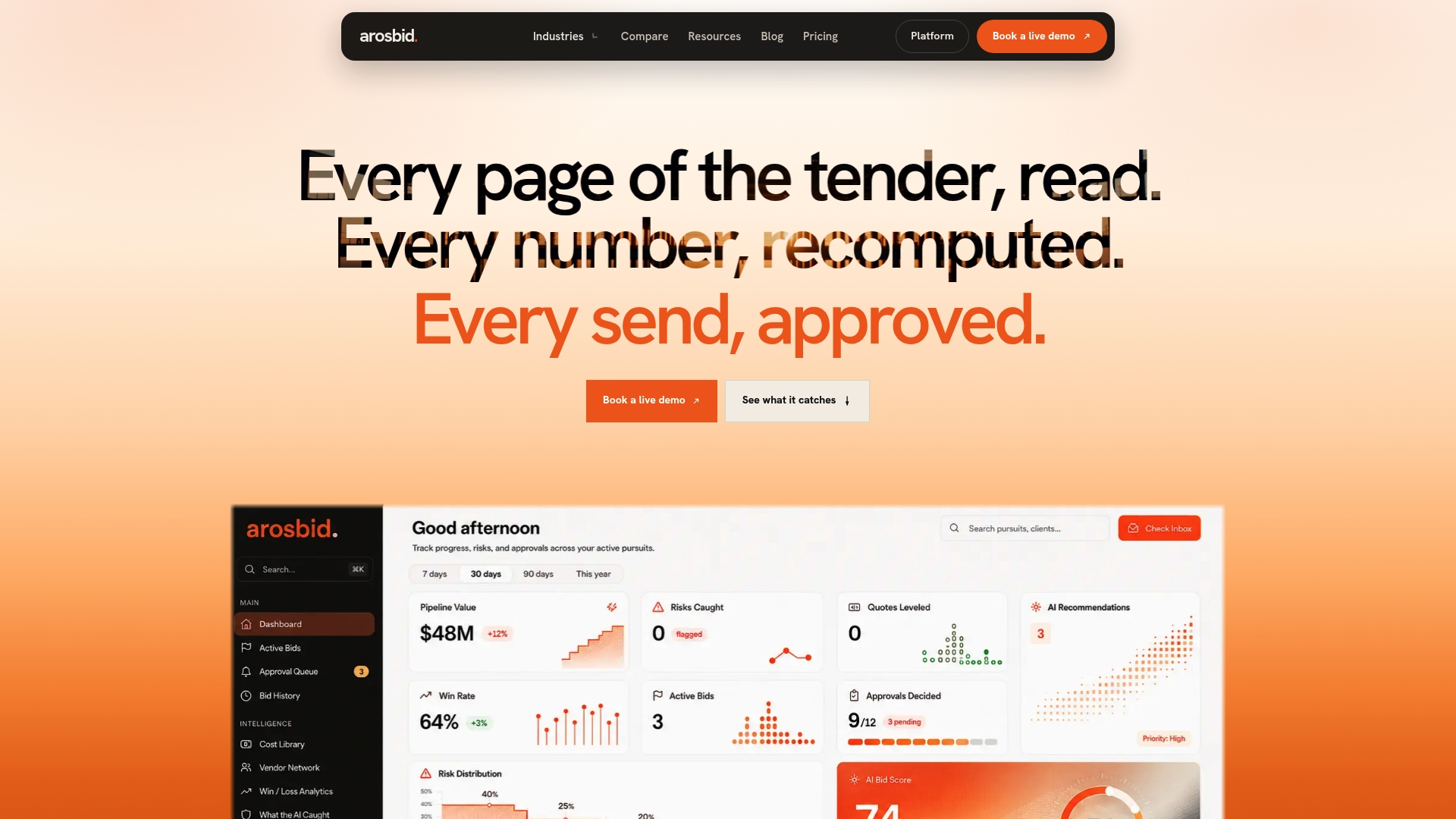
If your team handles bids across multiple trades, from MEP to roofing to structural steel, the platform adapts its checklists to each scope automatically rather than treating every bid as identical. See how it fits your current process by booking a live demo and walking through a real solicitation with the team.
Where to Go Deeper on Proposal Requirements
A few sources are worth bookmarking beyond this article. For commercial and general contracting templates, the Pipedrive bid proposal guide covers the core structural fields in more depth than most template sites. For public-sector procurement rules specifically, including bonding and prevailing-wage obligations that don’t apply to private commercial work, the Virginia Tech construction contracting text is a more rigorous reference than most contractor blogs.
For legal language around validity periods and formal acceptance terms, LegalClarity’s breakdown of bid proposal letters walks through the clauses that hold up in a dispute. And if you’re assembling your first template from scratch, the CrewConductor contractor proposal template offers a clean starting structure built specifically around trade contractor needs rather than generic B2B sales language.
Sources
- Bid proposal template (Pipedrive blog)
- Bid and proposals (Virginia Tech Pressbooks)
- How to write a bid proposal (Indeed)
- Sample bid proposal letter (LegalClarity)