Protect Margin: Construction Buyout to Close in 2–6 Weeks for GCs and PMs
Protect Margin: Construction Buyout to Close in 2–6 Weeks for GCs and PMs ! Construction buyout planning title card Buyout is the phase where estimate assumptions become signed subcontracts and locked pricing.
Buyout is the phase where estimate assumptions become signed subcontracts and locked pricing. The two moves that protect your margin right after contract award: identify every long-lead item before it threatens mobilization, and finalize your shortlist for each critical trade package. Most buyouts run 2 to 6 weeks, and tools exist specifically to keep that window from stretching.
TL;DR:
- Accurate bid leveling is crucial, as sloppy normalization leads to scope gaps that resurface as costly negotiation fights or change orders later.
- Early and documented scope clarification meetings, with written commitments, prevent scope ambiguities that can erode profit margins.
- Managing long-lead items with written vendor commitments, staged purchase orders, and short, capped LOIs helps prevent schedule delays and schedule float erosion.
- Constructing detailed leveled bid comparison worksheets and documenting all scope assumptions reduces scope disputes and shortens buyout negotiations.
- Using a centralized command platform to track bid approvals, vendor quotes, and documentation helps avoid tracking failures that cause most buyout delays and margin erosion.
Table of Contents
- What Is the Construction Buyout Process, Step by Step?
- Building a Buyout Schedule Around Long-Lead Procurement
- Reading a Leveled Bid Comparison and Making the Call
- Negotiating BAFO Terms and Locking Commercial Protections
- What Belongs in the Executed Subcontract or PO
- Tracking Buyout Progress Without Losing the Thread
- Legal and Flow-Down Checks Before You Sign Anything
- The Risks That Actually Eat Your Margin
- Your Buyout Checklist, Week by Week
- Why Most Buyout Failures Aren’t About Negotiation Skill
- Run Buyout Through a Command Center, Not a Spreadsheet Sprawl
- Sources
What Is the Construction Buyout Process, Step by Step?
Buyout converts your winning estimate into executed commitments. It’s the bridge between “we got the job” and “crews are on site,” and every day it drags is a day of schedule float you don’t get back.
Here’s the sequence that works, in order:
- Kickoff and project assessment. Confirm the contract type (lump sum, GMP, cost-plus), review prime contract constraints, and reconcile your estimate’s contingency line against what you actually won. This is where you flag any gap between what was bid and what was awarded.
- Build the buyout log and assign ownership. Every trade package needs a named owner, a target award date, and a status. Without this, buyout becomes a pile of open emails nobody’s tracking.
- Run bid leveling. Normalize every subcontractor quote against the same scope, exclusions, and unit breakdowns so you’re comparing apples to apples, not headline numbers.
- Build the shortlist. Narrow each package to two or three qualified bidders based on price, scope completeness, and capacity.
- Request a Best and Final Offer (BAFO) when it’s warranted. Use it for high-value packages with real price spread or unresolved scope, not as a reflex on every trade.
- Negotiate and lock commercial terms.
- Execute subcontracts and purchase orders.
The step that determines how smoothly the rest goes is bid leveling. When leveling is sloppy, unresolved exclusions don’t disappear. They resurface later as negotiation fights or change orders, usually at the worst possible moment in the schedule.
A few things separate teams that buy out clean from teams that don’t:
- Scope clarification meetings happen before shortlisting, not after a subcontract is half-drafted.
- Every verbal commitment from those meetings gets written down the same day, not reconstructed from memory two weeks later.
- The buyout log is a living document, not a one-time spreadsheet someone builds and forgets.
- Ownership is assigned by name, not by department, so nothing falls into a gap between two people who each assumed the other had it.
Pro Tip: Assign a single “buyout captain” who owns the log across all packages, even if individual PMs run their own trade negotiations. One person seeing the whole board catches slippage faster than five people each watching their own lane.
Building a Buyout Schedule Around Long-Lead Procurement
The packages that threaten your mobilization date aren’t always the biggest dollar items — choosing reliable vendors for long‑lead demolition sequencing, like those at Barnes Demolition | Wilmington, NC, can be crucial to staying on schedule. They’re the ones with the longest lead times, and if you don’t flag them in week one, they quietly become your critical path.
Start by sorting every trade package into three buckets: standard lead time, extended lead time, and unknown (meaning you need a vendor to quote lead time before you can even categorize it). Structural steel, custom curtain wall, specialty mechanical equipment, and switchgear routinely run months out. A subcontractor that looks fine on price can still blow your schedule if fabrication doesn’t start soon enough.
- Get written lead-time commitments from vendors during the RFQ stage, not after award.
- Cross-reference every long-lead item against your project’s critical-path milestones, not just against the overall buyout timeline.
- Treat anything within four to six weeks of its fabrication start date as urgent, even if the subcontract isn’t fully negotiated yet.
- Flag dual-source options for anything single-sourced and long-lead. A backup vendor conversation costs you an hour now versus weeks later.
This is where the letter of intent (LOI) earns its place. When negotiation on final terms is still open but fabrication needs to start, issue a narrowly scoped LOI that authorizes procurement or design work without locking you into the full subcontract. Keep the commitment window tight, cap the dollar exposure, and set an expiration date that forces the parties back to the table before it becomes a de facto contract by default.
Pro Tip: Tie every LOI to a specific dollar cap and expiration date in writing. An open-ended LOI has a way of becoming the actual deal, term negotiations and all, whether you intended that or not.
Link buyout milestones directly to project schedule dates, not calendar weeks. “Steel package awarded by March 15” means something. “Steel package awarded in three weeks” drifts the moment kickoff slips.
Reading a Leveled Bid Comparison and Making the Call
A leveled comparison worksheet should show every bidder on the same axis: base scope price, listed exclusions, unit costs for major line items, and any assumptions the vendor baked into their number. If your worksheet just shows five lump-sum totals side by side, you’re not leveling bids. You’re just ranking guesses.
Build the worksheet with these columns at minimum:
- Base bid price and any alternates
- Scope inclusions and exclusions, listed explicitly, not summarized
- Unit pricing for major quantities (per ton, per square foot, per linear foot)
- Schedule commitments, including mobilization and lead time
- Payment terms requested by the vendor
- Any qualifications or assumptions attached to the quote
Price alone is a poor filter. Ask about safety record, historical change-order frequency on comparable jobs, and current backlog. A vendor stretched thin across six other projects is a scheduling risk even if their number is the best on the table.
When a bidder lists an exclusion or a clarifying assumption, don’t let it sit in an email thread. Convert it into a contract exhibit the moment you shortlist that vendor. Verbal clarifications that never get documented are one of the most common sources of scope disputes months into a project, when nobody can remember exactly what was agreed on the call.
Teams that treat bid leveling as a genuine discovery process, rather than a formality before signing, consistently spend less time in buyout negotiation. The scope gaps get caught upstream, where they’re cheap to fix, instead of downstream, where they’re a change order.
Negotiating BAFO Terms and Locking Commercial Protections
Best and Final Offer requests work when there’s real price spread or real scope ambiguity between your top two or three bidders. Sending a BAFO request to every trade regardless of spread just slows down your timeline and irritates vendors who already gave you their sharpest number.
When you do send one, be specific. Tell the bidder exactly which scope items or exclusions need clarification, and set a hard deadline. A vague “please resubmit your best price” invites a vague response.
Before you get to signature, lock these commercial terms:
- Payment terms and retainage. Negotiate the retainage percentage and release schedule now, not after the subcontract is drafted and the vendor has less incentive to be flexible.
- Change-order pricing mechanics. Define the markup percentage on labor and material for change work, and decide up front how general conditions costs are handled versus cost-of-work.
- Allowance and contingency approval. Spell out who approves allowance spending and contingency draws before the money starts moving, not after the first disputed invoice.
- Insurance and bond requirements. Confirm the subcontractor can actually meet your insurance certificate requirements and bonding capacity before you commit schedule to them.
- Flow-down obligations. Make sure prime contract requirements around notice periods, dispute resolution forum, and insurance minimums are unambiguously passed through, not left implied.
Negotiating these terms during BAFO, while you still have leverage from competing bids, gets you meaningfully better outcomes than trying to renegotiate after you’ve already committed to a single vendor.
What Belongs in the Executed Subcontract or PO
The subcontract or purchase order you sign should be a direct, traceable extension of what got negotiated. If the document doesn’t match the leveled scope and the BAFO outcome, you’ve just recreated the ambiguity you spent weeks eliminating.
- Attach the leveled scope sheet and meeting minutes as exhibits. Every clarification, every exclusion resolution, every verbal agreement from scope meetings goes into the contract as an attachment, not a memory.
- Document long-lead responsibilities explicitly. Name who orders what, by when, and what happens if a submittal approval delays fabrication.
- Set milestone dates tied to project schedule, not vague durations. “Submittals due within 10 business days of award” beats “submittals due promptly.”
- Define acceptance criteria. Specify what “complete” means for that scope of work, especially on trades prone to punch-list disputes.
- Spell out change-order pricing and notice mechanics. Include the markup rates and notice timelines you negotiated during BAFO, word for word, so there’s no renegotiation at change-order time.
- Confirm insurance certificates and bonding documentation are attached, not promised. A subcontract that says insurance is “required” without the certificate in hand isn’t actually secured.
The goal is a document where a project manager who wasn’t in any of the negotiation meetings could read it and know exactly what was agreed, when it’s due, and who’s on the hook if it slips.
Tracking Buyout Progress Without Losing the Thread
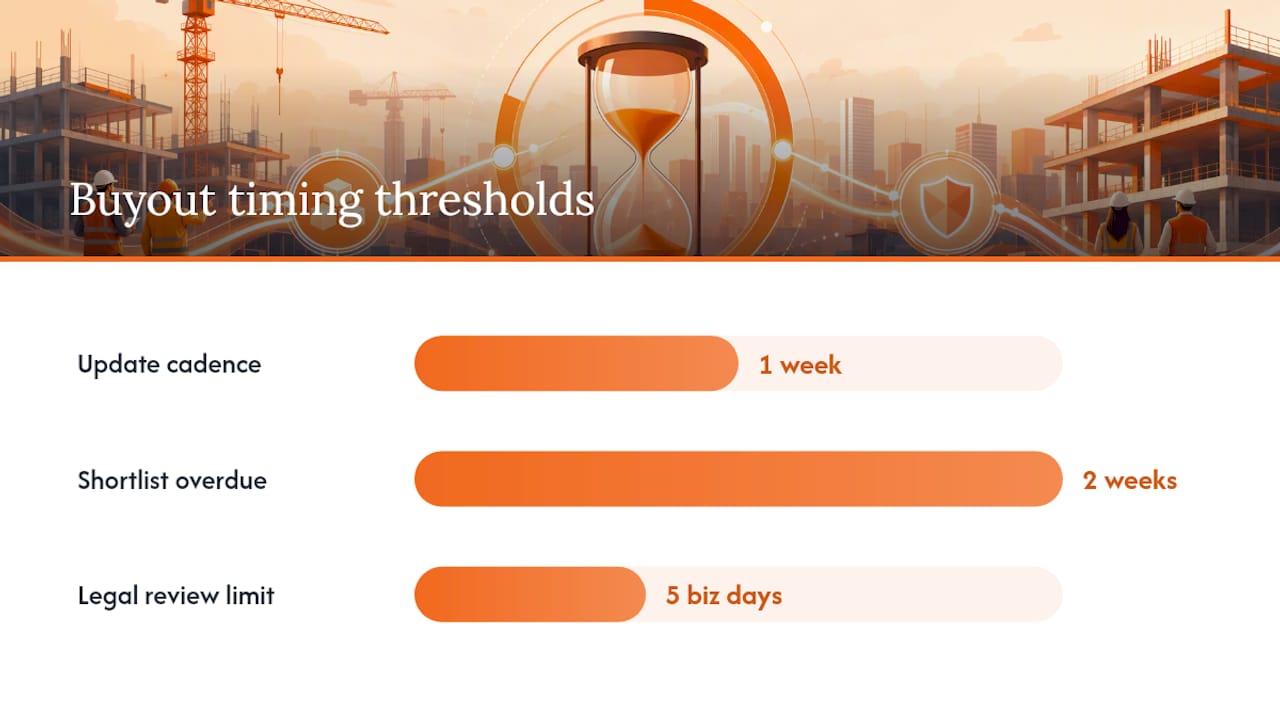
A buyout log only earns its keep if it’s updated often enough to catch problems before they become schedule problems. Teams that maintain a living log, updated weekly at minimum, close outstanding items faster than teams relying on memory and scattered email threads.
| Field | Purpose |
|---|---|
| Package name | Identifies the trade scope |
| Owner | Who’s driving this package to close |
| Status code | Open, shortlisted, BAFO sent, negotiating, executed |
| Target award date | Tied to project critical path |
| Current risk flag | Green, yellow, red based on schedule margin |
Watch for red-flag triggers: a package still “shortlisted” two weeks past its target date, a long-lead item with no vendor commitment past its fabrication window, or a subcontract sitting in legal review longer than five business days without movement.
Pro Tip: Review the buyout log in the same weekly meeting every time, not as an ad hoc check-in. Consistency in the review cadence matters more than the format of the log itself.
Legal and Flow-Down Checks Before You Sign Anything
State-level statutes routinely override whatever you negotiated on paper. Prompt-payment timelines, retainage caps, lien waiver form requirements, and anti-indemnity restrictions vary by jurisdiction, and finding out after signature is expensive.
Before execution, verify:
- Your state’s prompt-payment law and how it interacts with the payment terms you negotiated.
- Statutory retainage limits, which sometimes cap what you can legally withhold regardless of contract language.
- Required lien waiver forms, since some states mandate specific statutory language that generic templates don’t satisfy.
- Whether your prime contract’s insurance, notice, and dispute-resolution obligations are flowed down clearly, not left to interpretation.
- Any other controlling agreements in play, like a ground lease or lender covenant, and who on your team owns compliance with those.
Payment disputes frequently trace back to a prompt-payment statute or lien waiver requirement nobody checked before subcontracts went out for signature. A quick jurisdictional check during buyout costs you an afternoon. Skipping it can cost you months in dispute resolution.
The Risks That Actually Eat Your Margin
Buyout done well protects the profit margin baked into your original estimate. Buyout done sloppily erodes it, usually through the same handful of predictable failure points.
- Scope ambiguity and undocumented exclusions. The fix is strict scope clarification before shortlisting, with every exclusion written into the contract exhibit, not left as an assumption.
- Long-lead delays that blow the critical path. Mitigate with early LOIs and staged POs so fabrication starts before every commercial term is finalized.
- Payment exposure on high-risk vendors. Require certificates of insurance and financial standing up front, and structure staged payments tied to milestones for any subcontractor whose capacity or track record raises a flag.
- Change orders from unresolved BAFO items. Anything left “to be determined” at signature becomes a change order later, almost without exception.
The mindset shift that separates disciplined buyout teams from reactive ones: treat every open item on the log as a margin risk with a dollar value, not a to-do list checkbox.
Your Buyout Checklist, Week by Week
Run buyout against a calendar, not a vague sense of urgency.
- Weeks 0 to 2: Kickoff meeting, confirm contract terms, build the buyout log, flag long-lead items, issue RFQs for critical packages.
- Weeks 2 to 4: Complete bid leveling, build shortlists, send BAFO requests where price spread or scope ambiguity justifies it, issue LOIs for urgent long-lead items.
- Final close (weeks 4 to 6, longer for complex projects): Negotiate final terms, execute subcontracts and POs, attach all exhibits, confirm insurance certificates on file.
| Buyout log field | Example entry |
|---|---|
| Package | Structural steel |
| Status | BAFO sent |
| Target award date | Week 3 |
| Risk flag | Yellow, awaiting vendor response |
For scope clarification and BAFO requests, use a consistent template: name the specific scope item in question, state the deadline for response, and require the vendor to confirm in writing whether their price includes or excludes the item. Consistency here is what makes the leveled comparison actually comparable.
Why Most Buyout Failures Aren’t About Negotiation Skill
The buyout failures we see most often have nothing to do with a project manager’s negotiating ability. They come from missed clauses buried in a 40-page subcontract exhibit, specifications that quietly conflict between two trade packages, or a BAFO response that got lost in an email thread and never made it into the final contract.
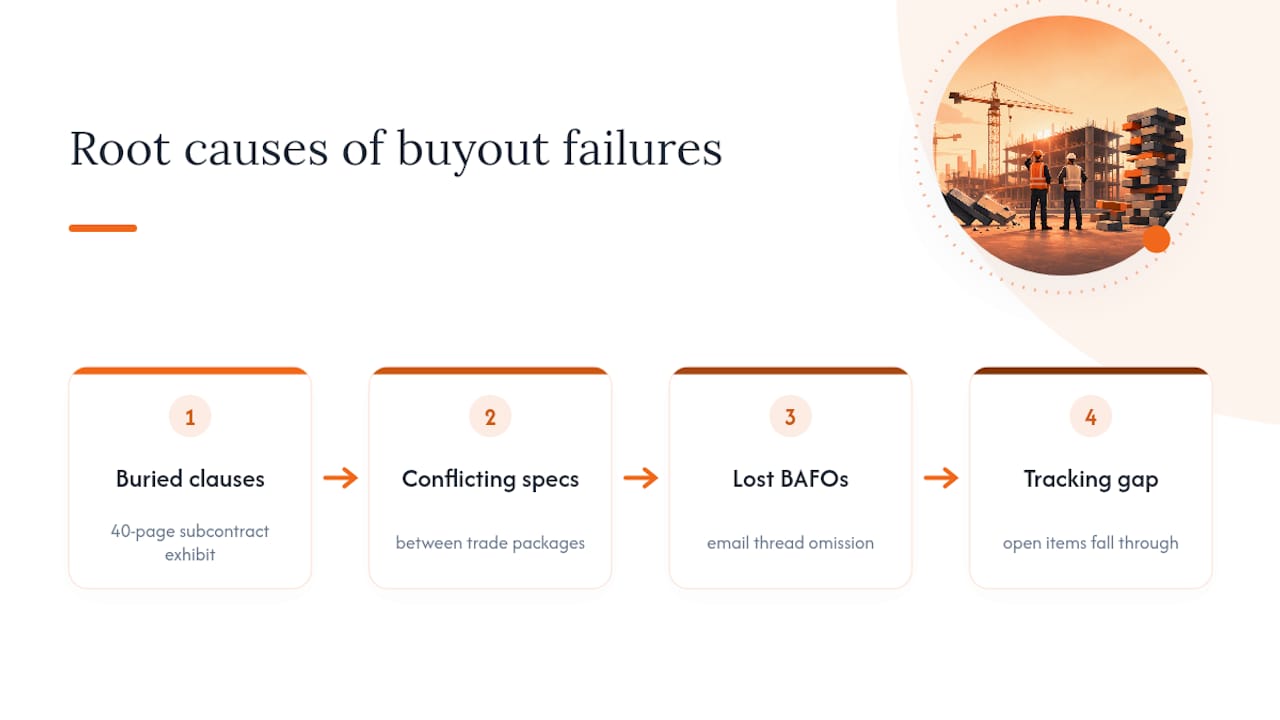
None of that is a skill gap. It’s a tracking gap. When five trade packages are moving simultaneously and each one has its own thread of RFQs, clarifications, and revised quotes, something falls through, usually the thing nobody was specifically watching.
A command center that tracks bid approvals, vendor quotes, and document compliance in one place closes that gap without asking anyone to change how they already work. Software like arosbid’s platform sits alongside tools you already use, like Excel and Outlook, rather than replacing them, which matters because the last thing a buyout team needs mid-project is a new system to learn.
The construction firms that buy out cleanly aren’t necessarily better negotiators. They’re the ones whose process makes it structurally hard to lose track of an open item.
— arosbid team
Run Buyout Through a Command Center, Not a Spreadsheet Sprawl
If you’ve been running buyout across a dozen open Excel tabs and an inbox nobody can search fast enough, you already know where the real cost hides: not in the negotiation, but in the tracking. There are software solutions that give your team one command center for the whole bid-to-buyout cycle, so vendor quotes, approvals, and compliance documents live in one place instead of being scattered across inboxes.
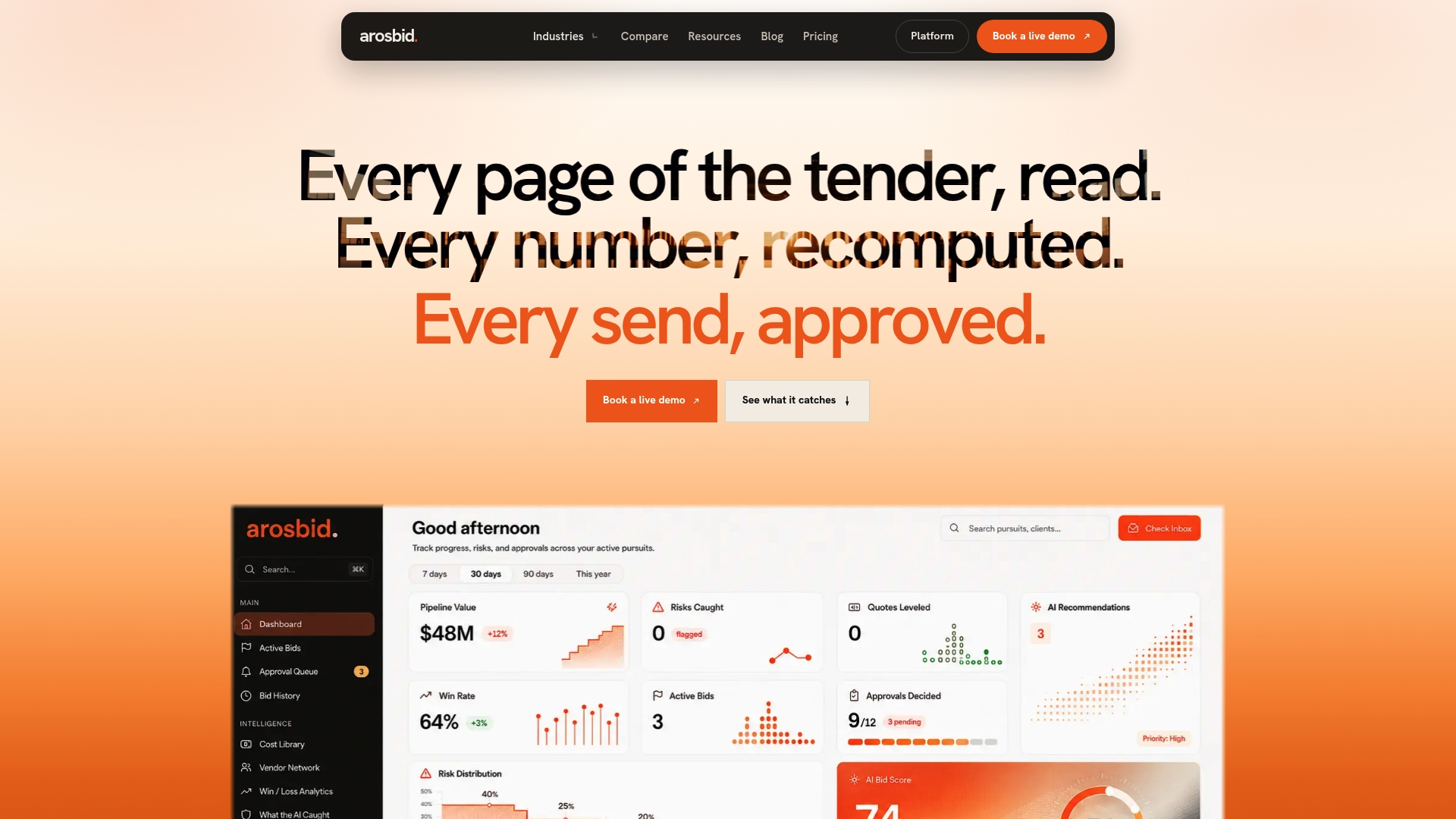
The platform automates the tedious part of bid leveling, flagging missed clauses and conflicting specifications before they turn into a change order six weeks into the job. It connects to Excel and Outlook directly, so your estimators and PMs keep working the way they already do, just with fewer things falling through the cracks between tools. For trades with heavy long-lead exposure, like structural steel or mechanical, arosbid’s industry-specific workflows are built to capture procurement steps generic spreadsheets tend to miss.
If your last buyout cycle ran long because nobody could tell you the real status of six open trade packages at once, there are platforms designed to help with exactly that problem. You can book a live demo to walk through your own buyout log with the teams behind these platforms.
Sources
- Buy-Out Process: From Winning Bids to Final Contracts — Foundamental
- Construction contract negotiation: a practical checklist — Sheppard Mullin
- Construction buyout — How GCs finalize subcontract awards after bid leveling — MeltPlan