Win Bids Without Cutting Scope: Value Engineering for Estimators
Win Bids Without Cutting Scope: Value Engineering for Estimators ! Decorative value engineering bid illustration Value engineering in bids means replacing scope cuts with function-preserving, lifecycle-aware alternatives that lower cost or improve performance.
Value engineering in bids means replacing scope cuts with function-preserving, lifecycle-aware alternatives that lower cost or improve performance. It works best when it starts early, gets quantified in dollars and years, and ships with a clear implementation path. Contractors who wait until after award still have a shot through formal VE change proposals, but the odds and the paperwork both get heavier.
TL;DR:
- Running value engineering during the schematic design or at the 60% design stage yields the greatest impact with minimal rework, unlike late-stage proposals that face delays and higher opposition.
- Effective VE relies on precise function statements, lifecycle cost analysis, and validated supplier quotes, with proposals needing clear implementation plans and responsible owners for approval.
- Most bid-relevant VE opportunities concentrate on the 20% of items responsible for 80% of costs, and automated tools help identify conflicting specs or inflated requirements early in the process.
- A structured VE workflow includes selecting high-value scopes, analyzing functions, brainstorming alternatives, evaluating costs, and documenting savings with templates to ensure repeatability.
- Incorporating a bid platform enhances VE by automating spec checks, standardizing supplier quotes, tracking approvals, and building a historical savings library to foster consistent, optimized bid practices.
Table of Contents
- What Value Engineering Actually Means (It’s Not Cost Cutting)
- When to Run VE: Timing Decides Everything
- The VE Job Plan: A Bidder’s Working Checklist
- Finding and Packaging VE Opportunities Inside a Bid
- Contract Mechanics: What FAR Part 48 Actually Requires
- Documenting Lifecycle Value: What Reviewers Actually Check
- VE Examples You Can Adapt to Your Own Bid
- Why VE Proposals Get Rejected (and How to Avoid It)
- Where a Bid Platform Fits Into VE Work
- Make VE a Repeatable Habit, Not a One-Off Idea
- See How ArosBid Handles VE Workflows Inside Your Bid Process
- Sources
- FAQ
What Value Engineering Actually Means (It’s Not Cost Cutting)
Value engineering is a systematic function analysis process aimed at optimizing value across a project’s lifecycle, not a hunt for cheaper materials. Autodesk’s guidance on the discipline is blunt about this distinction: VE assesses function relative to lifecycle cost, and treating it as a synonym for cost cutting is exactly how good proposals get rejected by owners who smell a bait and switch.
The core framework rests on three terms that estimators need to use precisely. Function is what the component actually has to do, written as a verb plus a measurable noun, such as “support load” or “resist moisture.” Cost is what it takes to deliver that function. Worth is the lowest cost at which that same function could theoretically be delivered. The gap between cost and worth is where VE opportunities live.

Function statements matter more than most estimators assume. A vague description like “improve wall system” invites scope creep and owner suspicion. A precise one like “resist wind load 120 mph” gives reviewers something they can actually verify against an alternative.
Lifecycle cost analysis is the second pillar, because a cheaper upfront number that costs more in maintenance or energy over 20 years isn’t value engineering, it’s deferred pain. Any credible VE recommendation has to show its lifecycle math, not just its bid-day math.
Done right, VE changes the competitive dynamics of a bid in ways that matter to both sides:
- It lets a contractor differentiate on engineering judgment instead of racing to the bottom on price.
- It gives owners a defensible reason to award to a bid that isn’t the lowest number.
- It surfaces buildability issues before they become change orders during construction.
- It builds a documented track record a contractor can reuse on the next similar project.
When to Run VE: Timing Decides Everything
The earlier VE happens, the more it’s worth and the easier it is to sell. Autodesk’s research notes that VE performed during schematic design or around the 60% design milestone delivers the greatest impact with the least rework, because drawings, specs, and subcontractor scopes haven’t hardened yet. Wait until construction starts, and the same idea that would have been a quick redline now triggers resubmittals, resequencing, and owner nervousness.
Three windows exist in practice, and each one changes what a contractor should do:
- Pre-bid or early design VE. Run internal VE reviews against the drawings before the bid is due, and where the solicitation allows it, submit alternate line items or a deductive alternate alongside the base bid.
- Bid-time VE. Package a function-preserving alternative directly into the proposal, with cost and schedule impact spelled out, so the owner can evaluate it without a separate approval cycle.
- Post-award VE (VECP). File a formal Value Engineering Change Proposal once the contract exists, following whatever clause governs the agreement, and expect a slower review and a stricter documentation bar.
Post-award proposals aren’t a lost cause, but they carry real friction. The contracting officer has to reopen a signed scope, verify the substitution doesn’t compromise anything already accepted, and run the change through whatever incentive-sharing formula the contract specifies. On projects where timing allows for it, that same idea proposed before the ink dries almost always moves faster.
The VE Job Plan: A Bidder’s Working Checklist
The Federal Highway Administration lays out an eight-phase VE Job Plan: selection, investigation, function analysis, creative, evaluation, development, presentation, and closeout. That structure wasn’t built for bid teams specifically, but it maps cleanly onto what an estimator or PM actually has to produce during bid prep.
- Selection. Pick which scopes or systems get VE attention. Don’t try to VE the whole project; target where the money is.
- Investigation. Build the baseline cost model for the selected scope, including current specs, quantities, and unit pricing.
- Function analysis. Write function statements for each targeted component as verb plus measurable noun. This step alone predicts whether an alternative survives technical review more than any other in the process.
- Creative. Brainstorm alternatives that satisfy the same function statement, without filtering for feasibility yet.
- Evaluation. Score each alternative against cost, schedule, risk, and performance parity, and eliminate the weak ones.
- Development. Get real supplier quotes, build the lifecycle cost comparison, and draft revised details or shop drawings.
- Presentation. Package the VE proposal with the net savings, implementation plan, and schedule effect in a format the reviewer can approve quickly.
- Closeout. Track whether the proposal was accepted, what was actually saved, and log it for the next bid.
Each phase needs a specific deliverable, not just a conversation. Investigation needs a line-item cost model. Function analysis needs written statements the design team can’t argue with. Creative needs a documented list of alternatives, even the ones that get cut later. Development needs validated supplier pricing, not a rough guess from memory.
Three templates make this repeatable instead of reinvented every bid cycle:
- A function statement worksheet that forces every targeted component into the verb-plus-noun format before anyone proposes an alternative.
- A net-savings worksheet that nets the alternative’s cost against downstream impacts and implementation cost, not just the sticker price.
- An implementation path document naming who revises drawings, who resubmits for approval, and what the schedule impact looks like.
Skip the templates and VE becomes a hallway conversation that never makes it into the bid. With them, it becomes a repeatable part of the estimating workflow.
Finding and Packaging VE Opportunities Inside a Bid
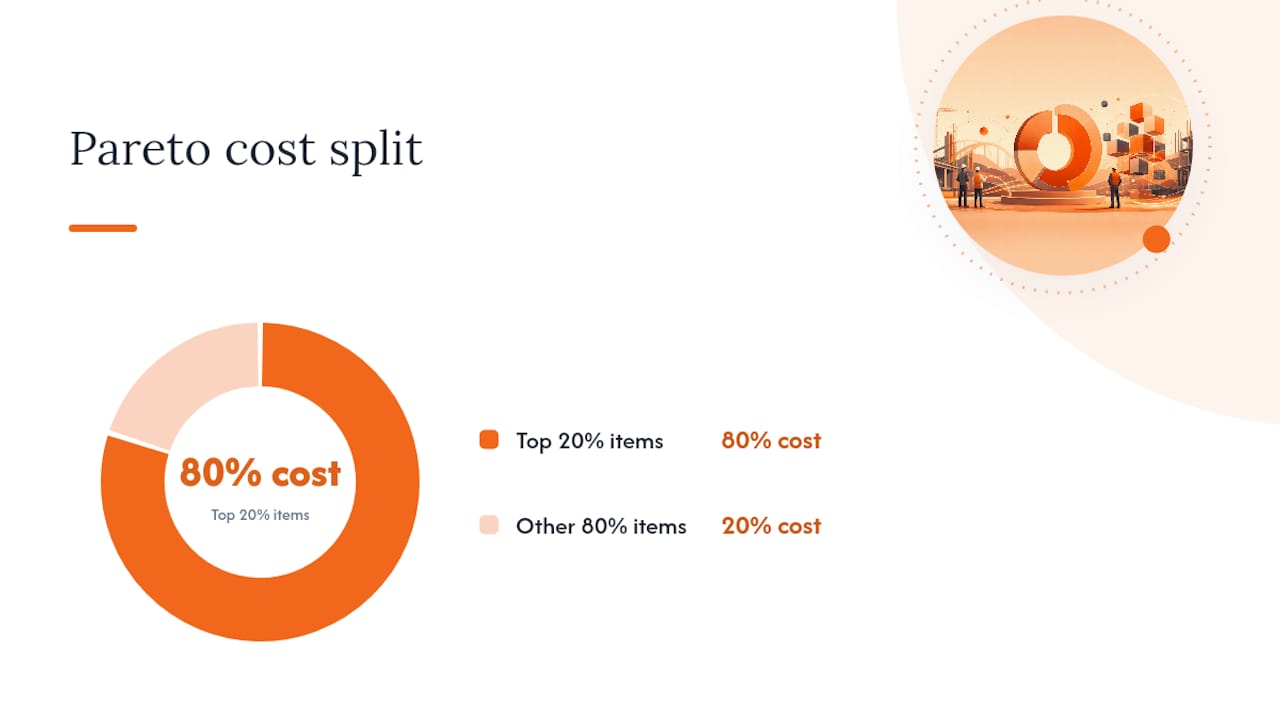
Start with the Pareto principle: roughly 20% of a project’s line items usually drive 80% of its cost, and that’s where VE investigation should focus first. Chasing savings on low-value trades wastes time the bid schedule doesn’t have.
Spec conflicts and inflated requirements often hide in plain sight across a bid package, especially on projects that recycled specs from an earlier job with different performance needs. Automated document review and RFQ leveling tools help here by flagging where one spec section contradicts another, or where a requirement is stricter than the actual function demands. That kind of cross-check is exactly the workflow a platform like AI bid leveling for trade vendor RFQs is built to speed up, standardizing vendor quotes so estimators can see real apples-to-apples pricing on the alternative fast.
The net savings calculation itself is simple in structure, even when the inputs take real digging:
Net savings = Original cost − (Alternative cost + Downstream costs + Implementation cost)
Downstream costs are the part estimators most often forget: extra coordination time, a longer submittal cycle, or added maintenance burden five years out. Skip that term and the “savings” number looks better than it actually is, which is the fastest way to lose credibility with a reviewer who runs the math independently.
Once a VE idea clears that calculation, it has three homes it can go:
- An alternate bid item submitted alongside the base bid, letting the owner choose it without a separate approval process.
- An optional deductive line item that shows the dollar value of accepting the substitution.
- A standalone VE proposal, submitted separately with its own implementation plan, when the change is complex enough to need its own review.
Pro Tip: Never submit a VE alternative without a named owner for the implementation work. Reviewers reject proposals that sound great on paper but leave open who actually revises the drawings and coordinates the trade sequencing.
Contract Mechanics: What FAR Part 48 Actually Requires
Federal contracts run VE through FAR Part 48, which sets the policy for value engineering clauses and requires agencies to give contractors procedures for submitting proposals, along with incentive-sharing language when a proposal gets accepted. Clause 52.248-3 is the specific mechanism most construction contracts reference for VECPs, and FHWA guidance encourages state agencies to include VECP clauses in construction contracts even outside strict federal procurement.
A VECP that actually gets approved needs to include:
- A clear description of the current requirement and the proposed alternative.
- Comparative advantages and disadvantages, stated honestly, not just the upside.
- Cost estimates for both the original and alternative approach.
- Collateral costs, meaning anything the change affects beyond the immediate line item.
- The schedule effect, whether the change speeds things up, slows them down, or is neutral.
Processing happens through whatever channel the contract specifies, usually a written submission to the contracting officer, who then has a defined window to accept, reject, or request more information. Where an incentive-sharing clause applies, accepted savings get split between the contracting agency and the contractor at whatever percentage the contract sets, which is worth checking before assuming 100% of a saving flows to the bid.
Three details separate proposals that clear this process from ones that stall: real supplier quotes instead of budget placeholders, a realistic implementation schedule instead of a vague “minimal impact” line, and a named party responsible for revising drawings once the change is approved.
Documenting Lifecycle Value: What Reviewers Actually Check
A reviewer evaluating a VE proposal wants a line-item comparison, not a narrative. At minimum it needs the original spec and cost, the alternative spec and cost, downstream impact, implementation cost, and the resulting net saving in one table they can scan in under a minute.
Lifecycle cost analysis inputs matter just as much as the upfront numbers:
- Energy use over the system’s expected service life.
- Maintenance frequency and cost across that same period.
- Expected replacement life compared to the original spec.
- Salvage or residual value at end of life, when relevant.
Validation is what turns a spreadsheet into an approvable proposal. Practitioner guidance is consistent on this point: proposals lacking accurate cost comparisons, downstream cost accounting, or a clear implementation plan get rejected far more often than ones that include supplier quotes, test data, and shop drawings backing the alternative. Someone also has to be named as responsible for the implementation work, or the whole package reads as theoretical.
VE Examples You Can Adapt to Your Own Bid
Real VE ideas tend to follow the same pattern: state the function, propose an alternative that meets it, and calculate the lifecycle effect before pitching it. Trade-relevant examples tend to cluster around a few recurring categories.
- Structural. Function: “transfer load to foundation.” An alternative connection detail or simplified framing approach can meet the same load path while cutting fabrication and erection time. Caveat: get the engineer of record’s sign off before submitting, since load path changes always draw scrutiny.
- MEP. Function: “distribute conditioned air” or “convey process fluid.” Prefabricating risers or modular mechanical skids off site reduces onsite labor hours and shrinks schedule risk from weather or trade stacking. Caveat: confirm the fabrication shop can hit the same tolerance and inspection requirements as field-built work.
- Envelope. Function: “maintain thermal performance” or “control moisture intrusion.” An alternate glazing spec or insulation assembly can hold the same R-value or U-factor at a lower installed cost. Caveat: run the lifecycle energy numbers before assuming a cheaper unit price actually saves money over the building’s life.
Each pattern only works when it starts from the function statement, not from a supplier’s catalog. Working backward from “what’s cheaper” instead of “what does this need to do” is the fastest way to propose something that fails technical review.
Why VE Proposals Get Rejected (and How to Avoid It)
Most rejected VE proposals fail for a handful of repeatable reasons: late timing, missing lifecycle costs, a vague or missing implementation path, a reduction in an essential function disguised as a “minor” change, no validated supplier pricing, or a presentation that reads as adversarial toward the design team instead of collaborative.
- Coordinate with the design team early instead of surprising them with a finished proposal.
- Build the complete cost worksheet, lifecycle inputs included, before submitting anything.
- Name a specific implementation owner in every proposal.
- Back every alternative with a real, current supplier quote, not a rough number from the last job.
Pro Tip: If a design team wasn’t looped in during the creative phase, expect pushback in evaluation, even when the numbers are solid. Technical reviewers protect their own scope decisions, and a proposal that feels like a surprise reads as a threat rather than a collaboration.
Where a Bid Platform Fits Into VE Work
Most of the friction in VE work isn’t the engineering, it’s the coordination: chasing supplier quotes, catching spec conflicts before they become disqualifications, and keeping a record of what’s been tried before. A structured bid platform can absorb a lot of that overhead.
- Automated document and spec checks flag conflicting requirements across a bid package before they turn into a rejected VE substitution.
- Vendor quote leveling standardizes supplier pricing so the alternative-cost side of a net-savings calculation holds up under review.
- Centralized approval tracking keeps every VE proposal’s status visible instead of buried in someone’s inbox.
- A historical cost library lets estimators pull what a similar substitution actually saved on a past project instead of guessing.
arosbid’s platform is built around that kind of command center, and it integrates with Excel and Outlook so teams don’t have to abandon tools they already run their estimating process on.
Make VE a Repeatable Habit, Not a One-Off Idea
The contractors who win with VE aren’t smarter, they’re more consistent. Run scheduled VE workshops on every bid over a certain size, pull people from design and estimating into the room together, and keep a running cost library of what actually got saved and accepted. Track acceptance rate and win-rate impact over time, not just the dollar figure on one proposal.
— arosbid team
See How ArosBid Handles VE Workflows Inside Your Bid Process
arosbid gives estimating teams a structured command center for exactly the coordination work that VE proposals depend on: catching conflicting specs before they sink a bid, leveling vendor quotes so alternative-cost numbers hold up, and keeping approvals visible instead of scattered across email threads.
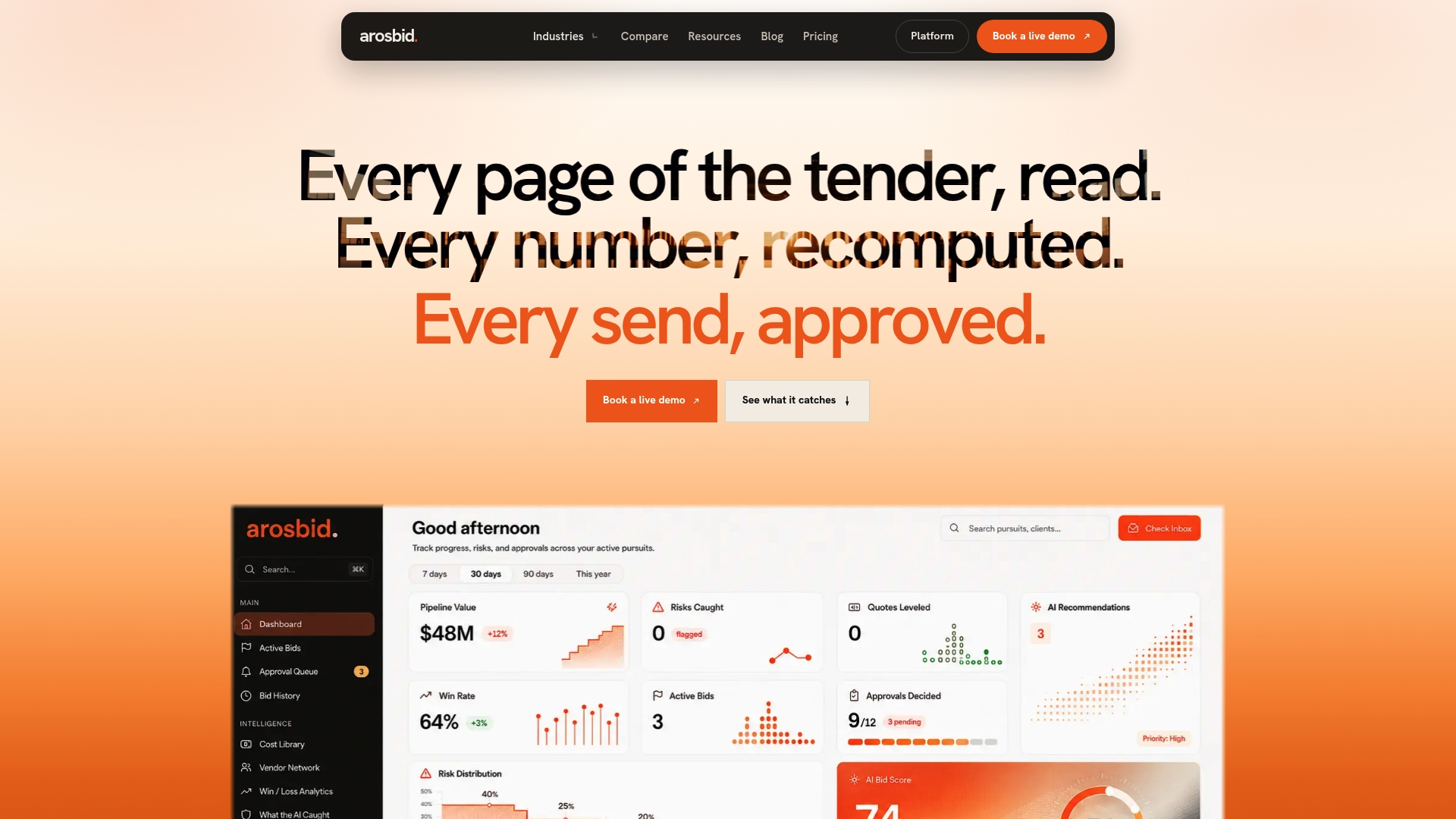
Because the platform integrates with commonly used tools, teams don’t have to overhaul how they already work just to add this layer of scrutiny. If you’re running VE reviews on upcoming bids and want a faster way to level supplier quotes or pull historical costs on a similar substitution, look at the available plans, including One Desk, The Department, and The Whole Year, or book a live demo to see the command center in action on your own bid documents.
Sources
- FHWA — The Value Engineering (VE) Process and Job Plan
- Autodesk Construction Blog — Value engineering
- Acquisition
- The Virtual Estimation — Value engineering in construction estimating
FAQ
What Are Some Examples of Value Engineering?
Common examples include prefabricating MEP risers off site to cut labor hours, swapping a structural connection detail that meets the same load path at lower fabrication cost, or choosing an alternate glazing spec that holds thermal performance at a lower installed price. Each example starts from a function statement, not a cheaper catalog item.
What Are the Five Phases of Value Engineering?
Most industry references describe VE as having more than five phases; the FHWA’s job plan actually names eight: selection, investigation, function analysis, creative, evaluation, development, presentation, and closeout. Some simplified versions collapse these into five stages, but the eight-phase structure is the one federal and state transportation agencies use.
What Is Value Engineering in Simple Terms?
Value engineering is a structured process for finding alternatives that deliver the same required function at a lower lifecycle cost or better performance. It’s not the same as cutting scope or swapping in cheaper materials without checking whether they still do the job.
What Is Value Engineering in Procurement?
In procurement, value engineering usually shows up as a formal Value Engineering Change Proposal, governed in federal contracts by FAR Part 48 and clause 52.248-3. A contractor submits a documented alternative after award, and the contracting officer reviews it against required content like cost comparisons, collateral costs, and schedule effects before deciding whether to accept it.
How Does Timing Affect Whether a VE Proposal Gets Accepted?
VE proposed during schematic design or around 60% design has the highest acceptance rate because drawings and subcontractor scopes haven’t hardened yet. Proposals submitted after award through the VECP process still get approved, but they face a slower review and a stricter documentation bar than the same idea proposed earlier.